A Secret Weapon from Salmonella Could Help Us Maintain Healthier Microbiomes
The discovery could also lend itself to the development of future antibacterial therapies.
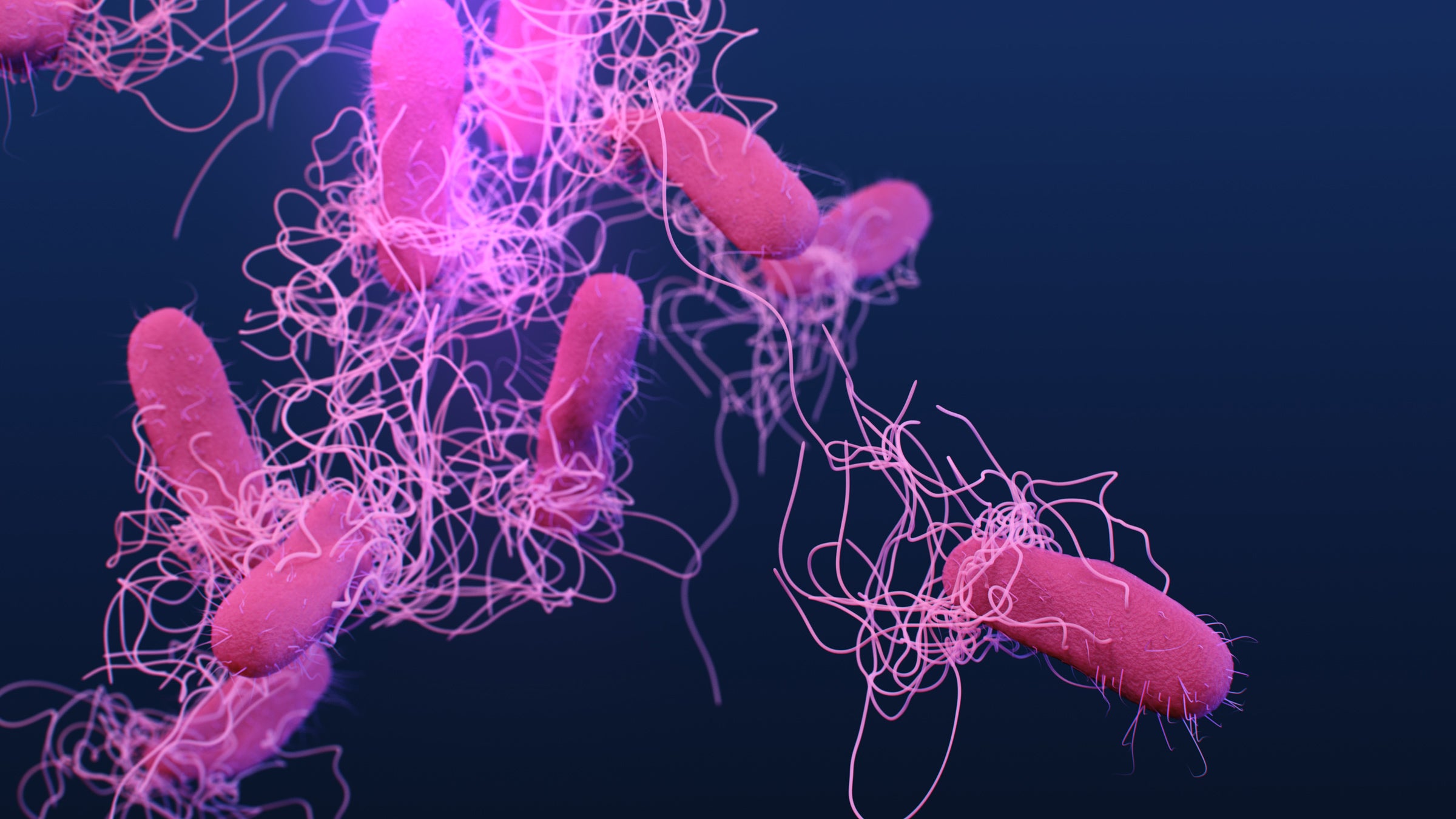
This is a medical illustration of drug-resistant Salmonella bacteria. More details here. Illustration credit: James Archer.
In the battle against infectious disease, it’s not just us against the microbes. Sometimes microbes battle each other, including to claim territory and resources. Emerging lessons from that process could inspire new ways to protect ourselves.
Researchers at The University of Texas at Austin and the University of São Paulo have discovered several toxic weapons salmonella use to poison other bacteria. Among those, they tested a toxin that gives salmonella a competitive advantage during mouse gut colonization. This work, published in the journal PLOS Biology, suggests new ways to limit gut pathogens without relying on broad-spectrum antibiotics.
“We are learning how bacterial toxins and their corresponding immunity proteins determine which bacteria thrive within a community,” said Ethel Bayer-Santos, assistant professor of molecular biosciences at UT Austin and co-lead author of the new study. “This knowledge could inform the design of probiotics that carry specific immunity proteins capable of neutralizing the weapons used by common gut pathogens in a given population, helping beneficial microbes outcompete them.”
This research identifying the toxin—an enzyme called Tox-Act1 that targets bacterial membranes—was supported by the U.S. Department of Energy and National Institutes of Health (NIH); The University of Texas at Austin; São Paulo Research Foundation; and the Brazilian Federal Agency for Support and Evaluation of Graduate Education.
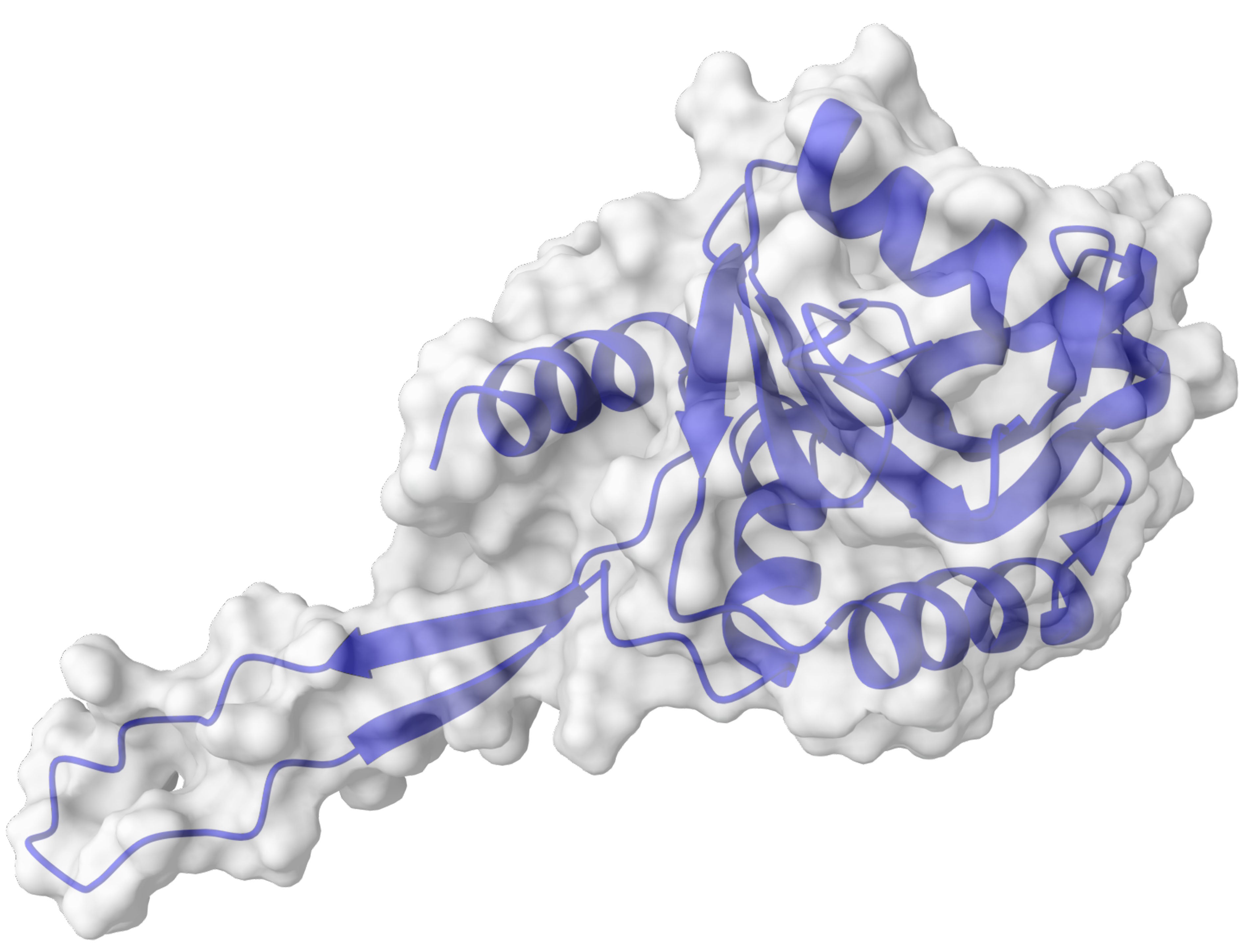
The protein structure of the Tox-Act1 toxin produced by Salmonella, as predicted by AlphaFold.
In the long term, Bayer-Santos says that by understanding the natural mechanisms bacteria use to kill each other, we can also learn new mechanistic strategies that could inspire future antibacterial therapies.
“Rather than starting from scratch, we study how evolution has already solved these problems and seek to define principles that may inform the development of future clinical approaches,” she said.
Many bacteria have a system for secreting toxic weapons, called the Type VI secretion system (T6SS). Within bacterial genomes, the genes that encode these T6SSs are often located near genes that encode the actual toxins they secrete. To find previously unknown toxins, the researchers combed through thousands of publicly available salmonella genomes collected by a global consortium called the 10,000 Salmonella Genomes project. When they searched around the T6SS genes, they uncovered a broad array of never-before-identified toxins, including Tox-Act1. Follow-up work demonstrated how the toxin works and its effectiveness in helping salmonella outcompete other bacteria in the mouse gut.
The research was led by Ethel Bayer-Santos at UT Austin and Robson de Souza at the University of São Paulo.